Monday, 16 March 2020

Location Of Underground Services Is Critical Before Any Excavation Work


Many contractors need to carry out some sort of excavation work very often. When you need to create a new build, it needs foundations, which involves digging. Street works almost always involve excavation. Ground works contractors, by definition, spend their lives digging.

The problem is that, wherever you need to dig, there may be underground services. In many places, such as pavements and roadworks, there almost certainly will be underground services, although it is possible that there may not be in a little used country lane. Even so, there could be.

Read more : Cable Avoidance

Monday, 17 February 2020

The Purpose Of PAS 256


In the UK there is a vast network of underground services such as water, electricity, gas, sewage pipes, telecoms, and more, and they can be found anywhere and everywhere. Depending on whose figures you believe, there are at least 1.5 million km of them and maybe a lot more. This presents a problem when a contractor needs to carry out any sort of excavation work, because striking many of these can result in serious damage, injury, and on occasion can be fatal.

The first thing to do before carrying out excavation is to contact the relevant local utilities and obtain any plans that they have. However, this in itself presents a problem because different utilities draw up their plans in different formats, they are not always accurate, and in some cases there are no plans at all.

To Read more: PAS256 Course

The Ever-Present Danger Of Underground Utilities When Carrying Out Excavation Work


When a contractor undertakes any sort of excavation works there is the ever-present danger of utilities running underground in the exact spot where the contractor needs to dig. They may only be a couple of feet down or they could be deeper, but the fact is that utilities can be anywhere. We all use electricity, water, and sewage pipes, and many people also use gas. We almost all have telephones and broadband.

Some of these are not going to cause a danger to human life, such as telephone cables. However, others can, and do, kill. Figures from Zurich Insurance show that there are an average 600 serious injuries and 12 deaths every year as a direct result of cable strikes. Any sort of damage to underground services will result in delays on a contract and can also result in serious financial penalties as well.

It is essential, therefore, that a thorough examination of the site is undertaken before a spade is put into the ground. Of course, since all utilities run underground, we cannot see them, so it is necessary to make use of the tools that have been designed to locate and identify them, namely the CAT and Genny.

These are indeed very sophisticated tools, but it should also be noted that they do have their limitations. If you believe everything they say, you could get into serious trouble.

For example, you might use the CAT on an area of land, and it tells you there is nothing there. You need to dig down six feet, so you happily dig away. However, what you didn’t know was that the CAT can only read to a certain depth – let’s say three feet in this instance. At a depth of four feet is an electricity cable, but the CAT was unable to record it.

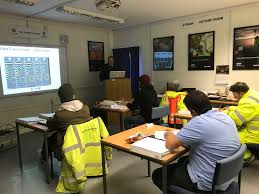
This is why CAT training from a specialist training company is absolutely essential. CATSCAN training will not only teach operatives how to use the CAT and the Genny in all modes, but a first-class course will also teach them the limitations of these tools, and that information is vital for safety.

Monday, 3 February 2020

THE VERY SOUND REASONS FOR THE PUBLICATION OF PA256


There are estimated to be anywhere between 1.5 million kilometers and 2.5 million kilometers of underground services in the UK, depending on whose figures you believe. Whichever figure is correct, it is a lot of buried assets, and they can be found anywhere, even in the most unlikely places.

In order to maintain and/or repair this huge amount of services, the utilities and Local Authorities between them carry out an estimated 3.5 million street works every year. Obviously, it is essential to take every precaution to avoid striking any underground services when carrying out any excavation work, partly because damaging the services can be costly and interrupt business, but also to avoid the danger of injury to workers carrying out the digging, along with any passers-by. Nonetheless, there are some 60,000 cable strikes in the UK each year which result in approximately a dozen fatalities, and a considerable amount of serious injuries.

To Read more: PAS256 course

Thursday, 16 January 2020

Training in the Use of Tools for Detecting Underground Services is Essential

It is a fact that wherever you may be in the UK – even standing in the middle of a field – there may well be underground services just under your feet. Electricity cables run pretty much everywhere, as do water pipes, sewer pipes, and telecoms, and perhaps to lesser extent gas pipes and other services.


In your local high street or council estate, it is obvious that most of them will be there, but even out in the countryside, it may be that one of the utilities decided upon a certain direction for its’ services which may not be apparent to us.

If you are a contractor who needs to excavate, you can obviously ask all the local utility providers for plans. Unfortunately, these are not always accurate, and in some cases non-existent. If they were perfect, there wouldn’t be some 60,000 cable strikes a year in the UK – and, yes, you read that figure correctly.

Of those utility strikes, many cause serious injury and around a dozen every year are fatal. This is why it is essential to undertake a thorough survey before even putting a spade into the ground, let alone a JCB.

Fortunately, we have a choice of many tools to help us locate, detect, and identify underground services, but unfortunately, it is not just a case of taking them out of the box and reading the instructions. If only it were that easy!

Read for full blog Click here

The Advice Provided By HSG47.


HSG47 is a guide issued by the Health & Safety Executive, which is aimed at all those involved in commissioning, planning, managing, and carrying out work on or near underground services. The HSE says that it will also be of use to the owners and operators of such services.

The guide outlines the potential dangers of working on or near such services with regard health and safety. It also gives advice on reducing any such dangers and refers to the indirect risks arising through damage to services.

HSG47course

Possibly the best piece of advice that the guide gives is that all operators should assume that underground services are there unless they have been shown otherwise. Underground services can be found anywhere. Some places are obvious, such as the high street or a residential area. There will be electricity cables, water pipes, telecoms, and sewers as an absolute minimum, but there could also be gas and other pipes.

Striking an electricity cable can cause serious injury, or even be fatal, while, striking a gas pipe can easily cause an explosion. Even a water pipe can cause injury, since water under pressure can hurl stones and other debris out of the earth. It could also cause serious flooding and perhaps collapse the sides of an excavation while it has men working in it.

Striking a telephone cable may not cause direct injury, but will considerably inconvenience the local populace, and may result in claims for damages. For example, it could shut down a business because it cannot get on to the internet which could result in considerable loss.    

Before undertaking any excavation, the first point of call must be the local utilities for plans of where their cables and pipes run. However, such plans should not be taken as gospel since they are not always accurate and, in some cases, may not exist.

All surveyors undertaking the location of underground services should attend an HSG47course which will show them how to use the CAT and Genny in all modes in order to locate services. Such a course will also explain the limitations of the equipment and how to avoid making any mistakes because of those limitations. 

When Carrying Out Excavation It Is Essential To Avoid Underground Services


When you are going to undertake any sort of work which involves excavation or digging, it is essential to take every precaution possible in order to avoid striking one of the many services that run underground. There are a lot of different services that can run underground, but the main ones are electricity, water, sewage, and gas. Striking any one of those can be serious and result in severe injury and in some cases death. There are also telecoms which are unlikely to cause injury, but which could still cause serious disruption.


This is why it is necessary to undertake a full survey of the area in which you are going to excavate before so much as putting a fork or spade in the ground. The first thing to do is to contact the utilities in the area and get the plans. However, these must only ever be used as a guide. They may not be complete. They may not be accurate, Furthermore, there may be no plans available.

Any surveyor endeavouring to locate underground services needs to make use of the CAT and Genny. A surveyor must also understand how to use them in combination and in all modes in order to be as accurate as possible, but also needs to understand their limitations. They do have certain limitations.

For instance, it is possible for them to give a negative reading when there is, in fact, something there. Depending on the machine being used, some will only give a reading to a certain depth. That means that you could think there is nothing there when there actually is, but it is deeper than the machine can read.

Read more information Click here