Friday, 13 July 2018

Training In The Use Of The Vivax Metrotech VLoc Pro

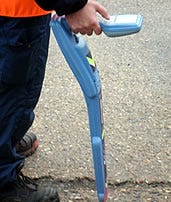
The Vivax Metrotech VLoc Pro is an advanced tool that helps operators to quickly and accurately detect buried utilities. The Vloc Pro uses dual core processing and co-located antennae to ensure optimal performance. Vloc training is vital in order to learn how to use the tool to its’ fullest effect, and at the same time understand its’ limitations.


There are far too many cable strikes in the UK from contractors digging without being fully aware of cables and utilities underneath, the type of utility, and the depth at which it is located. Even one cable strike would be one too many, but the fact is that there are thousands every year, many ending in serious injury, and there are a dozen or so deaths every year as well. Professional Vloc Pro training can help to avoid some of these dreadful incidents.

Considerable emphasis is put on classroom Vivax training so that the operatives understand the need for surveying underground utilities, together with the guidelines of HSG47, and how they should conduct a survey to comply with the rules. Operatives should learn how to understand buried services STATS plans in order to gain some idea of the routes of underground utilities. They also learn about electromagnetic theory and the way that it is used in locating buried pipes and cables.

Read more on : Vloc training

Thursday, 14 June 2018

Bespoke Vivax Training from Sygma Solutions

Understanding the leading industry equipment and processes is a highly important part of any operative’s career. Regardless of the client, location or application, being able to conduct operations with confidence and knowledge is a cornerstone of solid utility location and avoidance.

Training
When searching for courses or vivax training programmes that offer guidance and experience in this area, it is incredibly important to look for practical experience in addition to theoretical knowledge of application methods. Topics that may be covered will vary depending on your course, but the fundamentals will stay the same regardless of which training partner you choose.


Understanding different types of service plans, health, safety and financial implications and national legislation relating to avoidance of danger from underground services will be a part of any respected training programme.

Remember that training courses will usually require delegates to bring their own cable location equipment. Even if this is provided, the make and model may be different to what you will use so it might be better to come with your own equipment.


Read more on : vivax training

The Best Utility Mapping Qualifications

Undertaking a professional qualification is an important milestone in the career of any operative. When planning your future, being able to act with experience, confidence and having a firm grasp of the advanced knowledge necessary to complete your task is essential.

ProQual QCF Level 2 Utility Training in Utility Location and Avoidance
When embarking on ProQual QCF Level 2 Utility Training, there are a number of areas that will be directly applicable to your eventual chosen application. Understanding the range of these important factors and processes will form the foundation of your future qualification and your understanding in the field.


ProQual Level 3 Utility Mapping Certification
The Level 3 Certificate in Utility Mapping and Surveying is highly important for those working in a surveying industry. This includes trainee surveyors or technicians, or those entering the surveying profession at various stages of their career.

The units covered during any relevant course will include the location and mapping of underground utilities in addition to understanding the system of navigation such as colour coding of underground services.

As a highly regulated area, courses will also teach the relevant regulations and guidelines relating to the location of readings maps, services, drawings, and surveys and reporting. 

Monday, 21 May 2018

Plans Are Not Always Reliable When Tracing Underground Cables And Pipes

Electromagnetic detection of underground cables has been in use since the turn of the 20th century and today this method of locating buried pipes and cables is almost universal. The main disadvantage of using this method is that it will not locate plastic pipes or any other lines that are non-metallic. However, utility companies that take the trouble to add a tracer wire to plastic pipes will not have any problem.

Plans should always be used when attempting to locate buried pipes and cables, but one of the problems is that many of them are inaccurate, and in other instances are not in existence. Confusion can also be caused when buried cables are close to each other, or where one may be above another. 


The RD8100 is the latest in a long line of electromagnetic detectors which have been developed over a period of 40 years. Radiodetection RD8100 training is available from specialist companies that provide cable detection training to the employees of contractors who are likely to undertake any sort of groundworks and will need to be aware of the likelihood of any problems with utility cables on the site.

The Reasons For The Serious Number Of Cable Strikes Every Year

It is estimated that no less than 1.5 million holes are dug in the ground every year in the UK by utility companies alone, let alone all of the other excavation carried out around the country in the course of construction works. It follows that it is inevitable that underground cables and pipes will be hit during the course of these works.

According to a study carried out in 2006 the reasons for utility strikes are due to one or a combination of factors including poor planning, lack of accurate information, lack of care around services, poor excavation techniques, limited understanding of cable avoidance tools and techniques, and rushing to finish a job.


According to the Health and Safety Executive in 2014, there are some 12 deaths and 600 serious injuries every year just from contact with electricity cables, let alone other utilities. It is also thought that operatives may take less care around some services – particularly telecoms – because they are perceived to be less hazardous than strikes on electricity cables or gas pipelines.

Read more on : CAT and Genny

Thursday, 19 April 2018

Learning To Use Radio Detection Devices Takes time And Practice

Radiodetection is the manufacturer of a series of radio detection devices for locating and mapping underground cables and pipes.  They are used in more than 60 countries for the purpose of avoiding cables and pipes when a contractor has to excavate soil in any location. Who knows what might be down there – and more importantly exactly where it is located – before we start to dig? It would also be helpful to know just how deep a cable or pipe is. Damaging buried utilities can not only be extremely dangerous to operatives working on the ground, but it can also be very expensive.

The RD8100 range of precision locators is designed to be used to pinpoint accurately a range of different cables and pipes in a variety of locations.  These professional instruments represent the culmination of Radiodetection’s experience in the design and manufacture of locators.

Radiodetection RD8100 training


However, using the RD8100 locators is not simply a matter of taking them out of the box and “off we go!” Learning how to use them takes time and practice in a number of different situations. Imagine never having seen a car before. You can’t just sit in the driver’s seat and drive. You need training in what and where all the gadgets are, what they do, how they do it, and how to use them. The same thing applies to the RD8100 range.

Read More Original Content at Radiodetection RD8100 training

City & Guilds Level 2 Cable Avoidance Training

There are some 60,000 cable strikes every year in the UK by engineers and contractors undertaking groundworks. The consequences can be serious for contractors and involve injury or death, delays, fines, intervention from the HSE, loss of reputation, and of course there are cost implications.
City & Guilds Level 2 Utility Avoidance training is designed to teach operatives how to use all the available tools for underground cable detection correctly in order to reduce the chances of a cable strike to the minimum. The training will enable operatives to explain reasons why excavations take place, the consequences of a strike, and state the responsibilities of both clients and contractors. The training covers gas, electricity, water, sewage, and telecoms cables.

Level 2 Utility Avoidanc

Candidates will be able to identify types of drawings for different services, describe the sorts of inaccuracies that may be found in them, and interpret the data and detail. They will carry out risk assessments, select and use the correct safety equipment, and understand the correct methods of use for signal generators and cable avoidance tools. Candidates will also be able to carry out sweep searches of an area using the tools provided.
In order to obtain qualification cable avoidance level 2 candidates will have to understand and be able to explain safety considerations when excavating, methods of safe exposure of services, methods of identifying excavated services – together with their limitations, and identify potential service indicators that may be found. They will also be able to record and mark on updated plans.